


Reimagining Education In Pakistan: Contemporary Challenges and Critical Choices by Dr. Shahid Siddiqui
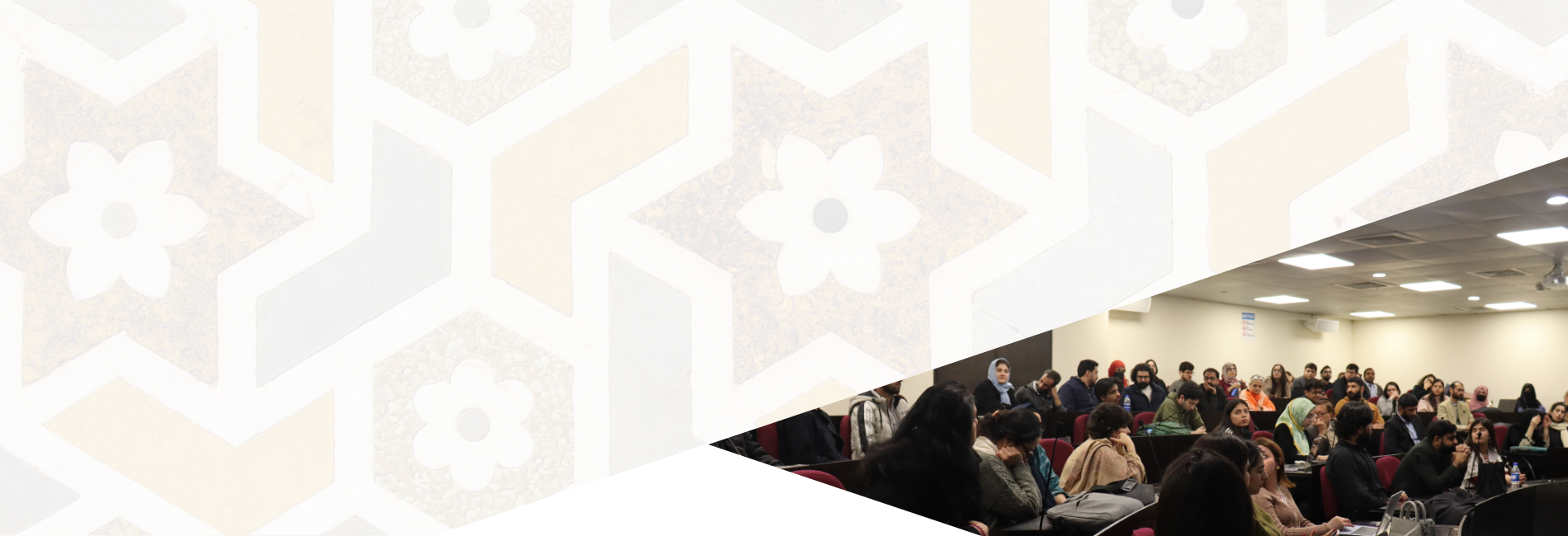
On 2 December 2025, we collaborated with the LUMS Syed Ahsan Ali and Syed Maratib Ali School of Education (SOE) to hold the launch of Dr. Shahid Siddiqui's latest book "Reimagining Education in Pakistan: Contemporary Challenges and Critical Choices". The talk was moderated by Dr. Tayyaba Tamim, Dean and Professor at SOE.
Dr. Shahid Siddiqui said that the biggest challenge of the 21st century is the fast-paced speed of change, and the biggest implication of this is the need to reimagine education. He emphasized the need for skills such as adaptability, collaboration, creativity, and critical thinking as we move forward.
He compared the conservative view of education to its contemporary view: one being passive, neutral, and apolitical, with a functionalist approach and a view to endlessly transmit agreed-upon values, and where obedience and conformity are rewarded. The other places emphasis on raising questions and producing alternatives.
He differentiated between hard power (such weapons) and soft power (knowledge and influence). He discussed Gramsci’s theory of hegemony and layers of power. The political approach is to use force or coercion (through the army, police, or brutal bureaucracy, for example). In civil society, however, the weapon is not force but discourse, language and literature, films and art, and so on. This is more effective than the political approach because this is where the idea of spontaneous consent comes into play: even after the power stops being exerted, it still has control over one’s mind. This is why education is important as a discursive force – as a force to question.
Even for teachers, he said, it is important to include reflective practice in pedagogical programs.
To this end, his new book explores the urgent need to rethink how we teach, learn, and lead in a rapidly changing world. It examines the deep-rooted inequalities, policy failures, and ideological blind spots that have shaped Pakistan’s education system. The book offers a bold, critical, and hopeful vision of education as a force for justice, creativity, and transformation. From classroom practices to language policy and academic freedom, it challenges readers to imagine a more equitable and forward-looking future for education in Pakistan. A valuable resource for students, teachers, curriculum developers, and policymakers, this book provides insights that can help shape meaningful educational reform.
Dr. Shahid Siddiqui serves as Dean of the Faculty of Social Sciences, Media Studies, Art and Design at the Lahore School of Economics. He has previously served as Vice-Chancellor of the Allama Iqbal Open University. His areas of interest include socio-cultural aspects of language, educational change, and critical pedagogy. In 2007, he wrote Rethinking Education in Pakistan: Perceptions, Practices, and Possibilities, followed by Adhe Adhoore Khawab in 2009 and Language, Gender, and Power: The Politics of Representation and Hegemony in South Asia in 2014. He holds a Ph.D. from the University of Toronto.
Mahbub ul Haq Research Centre at LUMS


Postal Address
LUMS
Sector U, DHA
Lahore Cantt, 54792, Pakistan
Office Hours
Mon. to Fri., 8:30 a.m. to 5:00 p.m.